
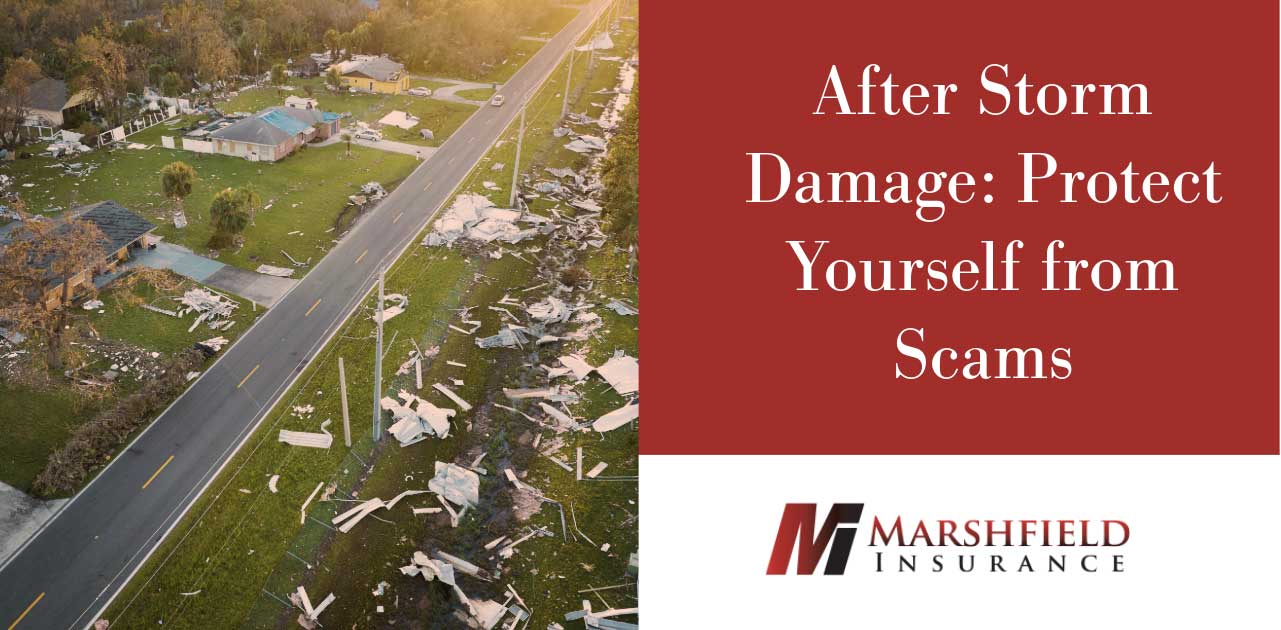
Storm Damage in Wisconsin: How to Avoid Repair Scams and Protect Your Insurance Claim
Severe weather has hit parts of Wisconsin this week, bringing thunderstorms, high winds, tornadoes, flooding, and hail. For many homeowners and drivers, that means dealing with damage, cleanup, and the stress of figuring out what to do next. In response, the Wisconsin Department of Agriculture, Trade and Consumer Protection recently urged consumers to be careful when hiring contractors and repair crews after a storm.
One of the biggest warnings is about so-called “storm chasers.” These are often out-of-town contractors who go door to door after severe weather, promising quick repairs and fast service. While some may sound convincing, DATCP says these crews can leave behind poor workmanship, demand large up-front payments, or disappear without completing the job.
At Marshfield Insurance Agency, we want our clients to know that the first steps you take after a storm can make a big difference, both in protecting your property and in keeping your insurance claim on track.
Start with your insurance company or agent
If your home, roof, siding, vehicle, or other property was damaged, contact your insurance agent or insurance company right away to begin the claims process. The Wisconsin Office of the Commissioner of Insurance also recommends making a list of damaged items, taking photos before cleanup, keeping samples of damaged materials when possible, and saving receipts for any repair or replacement costs. OCI also advises consumers not to throw away damaged property until the adjuster agrees, unless local officials require disposal for safety reasons.
That documentation matters. Clear photos, receipts, and records of conversations can help support your claim and reduce delays later.
Be cautious when hiring repair contractors
After a storm, it is natural to want repairs started immediately. But rushing can create more problems. DATCP recommends hiring established local contractors, asking trusted sources for referrals, confirming whether permits are required, and making sure all work is covered by a written contract that spells out materials, timing, and warranty details. The agency also recommends keeping copies of contracts, receipts, warranties, and communications, and obtaining lien waivers for payments made on home repair work.
For vehicle damage, consumers should seek recommendations from trusted local sources, review the shop’s reputation, document all communications, and remember that an auto body shop cannot perform unauthorized repairs or raise the price of quoted repairs without approval. DATCP says shops may hold a vehicle until payment is made for authorized work, but they cannot hold it over unauthorized repairs. After the work is complete, the shop must provide an invoice that itemizes repairs, parts, and labor.
Wisconsin has strengthened protections against predatory contractors
There is also an important legal update for Wisconsin property owners. On April 8, 2026, Governor Tony Evers signed Senate Bill 531, now 2025 Wisconsin Act 230, into law. The legislation is designed to strengthen consumer protections related to post-loss assignment of benefits in property insurance claims.
This matters because these agreements can sometimes shift control away from the policyholder and contribute to inflated claims, fraud concerns, and disputes. The goal of the new law is to create stronger oversight, require clearer policyholder notifications, and help protect insureds throughout the claims process.
What this means for Wisconsin homeowners
In plain terms, Wisconsin homeowners should be especially careful before signing anything after a storm. A contractor should not pressure you to hand over insurance rights, promise to cover your deductible, or rush you into a contract before you understand what it means. DATCP also reminds consumers that, under Wisconsin law, contractors cannot promise to pay any portion of a property insurance deductible, cannot negotiate with an insurance company on a customer’s behalf without permission, must ask whether the work is insurance-related before entering a contract, and must notify customers of cancellation rights if an insurer denies part of the claim for the work.
“After a major storm, people want to protect their home and get life back to normal as quickly as possible. That is exactly when bad contractors tend to show up. Our advice is simple: call your insurance agent first, document everything, and work with trusted local professionals. A little caution up front can save you a lot of money, stress, and frustration later.”
Nick Arnoldy
Owner/Broker, Marshfield Insurance Agency
Practical steps to take after storm damage
- Contact your insurance agent or carrier right away.
- Take photos and video of all visible damage.
- Make a written list of damaged property.
- Keep samples of damaged materials when possible.
- Save receipts for emergency repairs and related expenses.
- Be wary of door-to-door contractors offering immediate work.
- Get a written contract before repairs begin.
- Work with reputable local contractors whenever possible.
If you have questions about storm damage, coverage, deductibles, or the claims process, our team at Marshfield Insurance Agency is here to help.